Aluminum Alloy Grades Compared: 6061-T6 vs. 7075-T6 for Beach Chair Frames
2026-07-02
When you're shopping for a lightweight aluminum folding beach chair, the frame material is arguably the most critical factor determining how long your chair lasts, how comfortable it feels, and whether it survives a season of salty sea air. Two aluminum alloys dominate the conversation: 6061-T6 and 7075-T6. Both are frequently labeled as "aerospace-grade" or "aircraft aluminum," but beneath those marketing buzzwords lie very different materials with distinct strengths, weaknesses, and price points.
Understanding the difference isn't just for metallurgists—it's for anyone who wants to make an informed purchase, whether you're a beachgoer looking for the perfect chair or a B2B buyer sourcing bulk orders for a resort chain.
What Do 6061-T6 and 7075-T6 Actually Mean?
Both designations tell you two things: the alloy composition and the temper condition.
6061 aluminum belongs to the 6XXX series, where magnesium and silicon are the primary alloying elements. It's a magnesium-silicon alloy known for its excellent balance of strength, corrosion resistance, and workability. Think of 6061 as the Swiss Army knife of aluminum—versatile, reliable, and widely used in structural frames, bicycle components, marine fittings, and automotive parts.
7075 aluminum, by contrast, comes from the 7XXX series, with zinc as its primary alloying element, plus smaller amounts of magnesium and copper. This is the heavy hitter—originally developed for aircraft structures, it's one of the strongest commercially available aluminum alloys on the market.
The "T6" temper means both alloys have been heat-treated with a solution and artificially aged to maximize their mechanical properties. In the T6 condition, the alloys reach their peak strength and hardness.
Mechanical Properties: The Numbers That Matter
Let's get straight to the data. Here's how 6061-T6 and 7075-T6 compare across the key metrics that matter for beach chair frames:
Property
6061-T6
7075-T6
Ultimate Tensile Strength
~310 MPa (45,000 psi)
~560–570 MPa (83,000 psi)
Yield Strength
~270–276 MPa (39,000–40,000 psi)
~480–505 MPa (70,000–73,000 psi)
Brinell Hardness
~93–95
~150
Elongation at Break
~10–12%
~8–10%
Fatigue Strength
~96 MPa
~160 MPa
Density
2.70 g/cm³
2.81–3.0 g/cm³
What These Numbers Mean for a Beach Chair
Tensile strength is the maximum stress a material can withstand while being stretched or pulled before breaking. 7075-T6 delivers roughly double the tensile strength of 6061-T6. That's a massive difference—a 7075-T6 chair frame can support significant loads—often exceeding 300 lbs (136 kg)—while weighing a fraction of a comparable steel frame.
Yield strength measures the stress at which a material begins to deform permanently. Here again, 7075-T6 leads by a wide margin—approximately 480 MPa versus 270 MPa. For a beach chair, higher yield strength means the frame is less likely to bend or warp under heavy loads or after repeated use.
Hardness matters for durability against scratches, dents, and abrasion from sand and grit. 7075-T6's Brinell hardness of 150 versus 6061-T6's 93 means it's significantly more resistant to surface indentation.
Fatigue strength is the material's ability to withstand repeated stress cycles without developing cracks. With 7075-T6 at 160 MPa versus 6061-T6 at 96 MPa, the aerospace alloy will outlast 6061 in applications where the chair is folded, unfolded, and loaded repeatedly over years of use.
The Trade-Offs: Where 6061-T6 Wins
Given those numbers, you might wonder why anyone would choose 6061-T6. The answer lies in several critical trade-offs.
Corrosion Resistance
This is a big one for beach chairs. 6061-T6 offers excellent corrosion resistance, especially in marine and salt-spray environments. Its magnesium-silicon composition naturally resists the corrosive effects of saltwater and humid coastal air.
7075-T6, despite being stronger, is more susceptible to corrosion, particularly stress corrosion cracking in the T6 temper. The copper content that helps give 7075 its strength also makes it more sensitive to intergranular corrosion. This is why 7075 often requires additional surface treatments—anodizing or protective coatings—when used in outdoor or marine environments.
Weldability
If your beach chair frame involves welded joints, 6061-T6 is the clear winner. It offers excellent weldability using standard TIG and MIG techniques. 7075-T6, by contrast, is not considered weldable without specialized techniques—it's prone to solidification cracking and loss of mechanical integrity during welding.
For mass-produced beach chairs, this manufacturing difference can be significant. Welding is faster, cheaper, and more reliable with 6061.
Machinability and Formability
Both alloys machine well, but 6061 is slightly easier to machine due to its lower hardness. More importantly, 6061 has good formability—it can be bent, shaped, and formed more easily than the harder 7075. 7075 is not conducive to forming unless it's in the annealed condition. For complex chair frame geometries, 6061 is simply more fabrication-friendly.
Cost
This is perhaps the most practical consideration for bulk buyers. 7075 typically costs 1.5 to 2 times more than 6061, depending on size and form. For a resort chain ordering thousands of chairs, that cost difference adds up quickly.
Practical Implications for Beach Chair Frames
So which alloy is right for your beach chair? It depends on your priorities.
Choose 6061-T6 If:
Corrosion resistance is paramount — you're using the chair in saltwater environments and want minimal maintenance
Cost is a major factor — you're buying in bulk or targeting a mid-range price point
Complex frame geometries require bending and welding during manufacturing
You want the best all-around value — 6061-T6 is often called the "versatile workhorse" for good reason
Weight is important but not the only consideration — 6061 is still lightweight at 2.70 g/cm³
Choose 7075-T6 If:
Maximum strength-to-weight ratio is non-negotiable — you need the lightest possible frame with the highest load capacity
The chair will see extreme use — high-frequency folding, heavy users, rugged conditions
You're willing to pay a premium for aerospace-grade performance
The frame design uses bolted or riveted joints rather than welds
You can specify anodized or coated surfaces to mitigate corrosion concerns
The Bottom Line for Buyers
For most beach chair applications, 6061-T6 beach chair represents the sweet spot of performance, durability, and cost. It offers moderate strength, superior corrosion resistance, and exceptional weldability—all at a reasonable price point. When you see a quality aluminum beach chair with a frame that doesn't rust, folds easily, and supports 250–300 lbs, there's a good chance it's built with 6061-T6.
7075-T6 Camping Chair, on the other hand, is for the premium tier—chairs marketed to serious outdoor enthusiasts, expedition campers, or those who demand the absolute best in strength-to-weight performance. It's the alloy that lets manufacturers build ultralight chairs that still support heavy loads, but it comes with a higher price tag and requires more careful attention to corrosion protection.
A Word of Caution
Some manufacturers slap the label "aerospace aluminum" on their chairs without specifying the alloy grade. Don't be fooled. If a product only says "aircraft-grade aluminum" without mentioning 6061 or 7075, proceed with caution. Reputable suppliers will always specify the exact alloy and temper—6061-T6 or 7075-T6—so you know exactly what you're getting.
6061-T6 is the practical choice for most beach chairs—corrosion-resistant, weldable, formable, and cost-effective. 7075-T6 is the performance choice—stronger, harder, more fatigue-resistant, but more expensive and corrosion-sensitive. Both are excellent lightweight aluminum options that outperform steel frames by a wide margin. The right choice depends on your budget, your environment, and how much weight you need your chair to carry.
For B2B buyers sourcing beach chairs for resorts, rental businesses, or retail, 6061-T6 typically offers the best return on investment. For premium outdoor brands targeting serious adventurers, 7075-T6 can be a compelling differentiator. Know your alloy, know your application, and you'll never sink into the wrong chair.
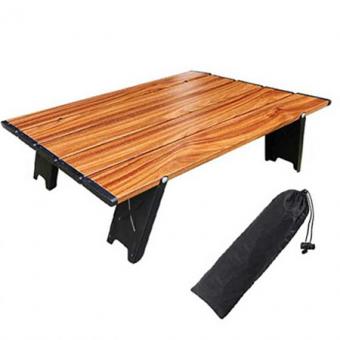
Brand: ANHUI FEISTEL FACTORY Relate Manufacturing: OEM & ODM Product: A lightweight, small, foldable picnic table perfect for outdoor activities. Made of durable materials, it's portable, easy to set up.
Brand: ANHUI FEISTEL FACTORY Relate Manufacturing: OEM & ODM Product: The custom lightweight metal iron foldable moon chair offers durable support and comfort, ideal for outdoor camping, with a compact, portable design for easy transport and storage.
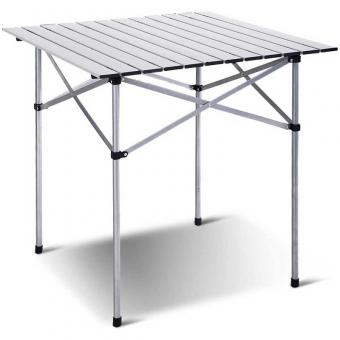
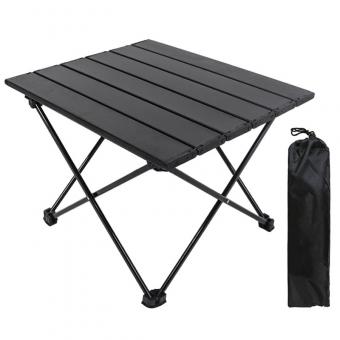
Brand: ANHUI FEISTEL FACTORY Relate Manufacturing: OEM & ODM Product: Compact and lightweight aluminum folding table, perfect for camping, beach, or outdoor activities. Easy to carry, sturdy, and ideal for holding food and drinks.
Brand: ANHUI FEISTEL FACTORY Relate Manufacturing: OEM & ODM Product: This camping foldable wooden lounge chair features a sturdy frame, ergonomic reclining design, and compact folding structure—perfect for relaxing at the beach, campsite, or backyard.
Brand: ANHUI FEISTEL FACTORY Relate Manufacturing: OEM & ODM Product: The hiking backpacking mini stool combines a durable Oxford fabric foldable design with a creative pencil case pocket, offering portability, comfort, and practicality for camping and outdoor adventures.
Brand: ANHUI FEISTEL FACTORY Relate Manufacturing: OEM & ODM Product: An outdoor ultralight single compact portable folding camping bed ideal for backpacking, featuring a durable frame, easy setup, and a convenient carry bag for travel.
Newsletter
Subscribe to our newsletter to receive news, updates, and special offers by email.